Moonj
A slow-fashion brand whose storytelling runs on metaobjects: fabric libraries, product drawers and editorial pages published from the admin like a CMS.
Client
Moonj
Role
Theme developer
Service
Custom theme · Liquid · Horizon · Tailwind
Work Details
The brief
Moonj is a slow-fashion, handcrafted apparel brand, and its store is really a content platform wearing a shop. The build sits on Horizon, Shopify's newest theme architecture, with Tailwind for styling, and the interesting engineering is in how far I pushed metaobjects: most of the storytelling on the site (craftsmanship, fabrics, garment care) lives as structured data in the admin, rendered by templates I built with their own logic.
The build
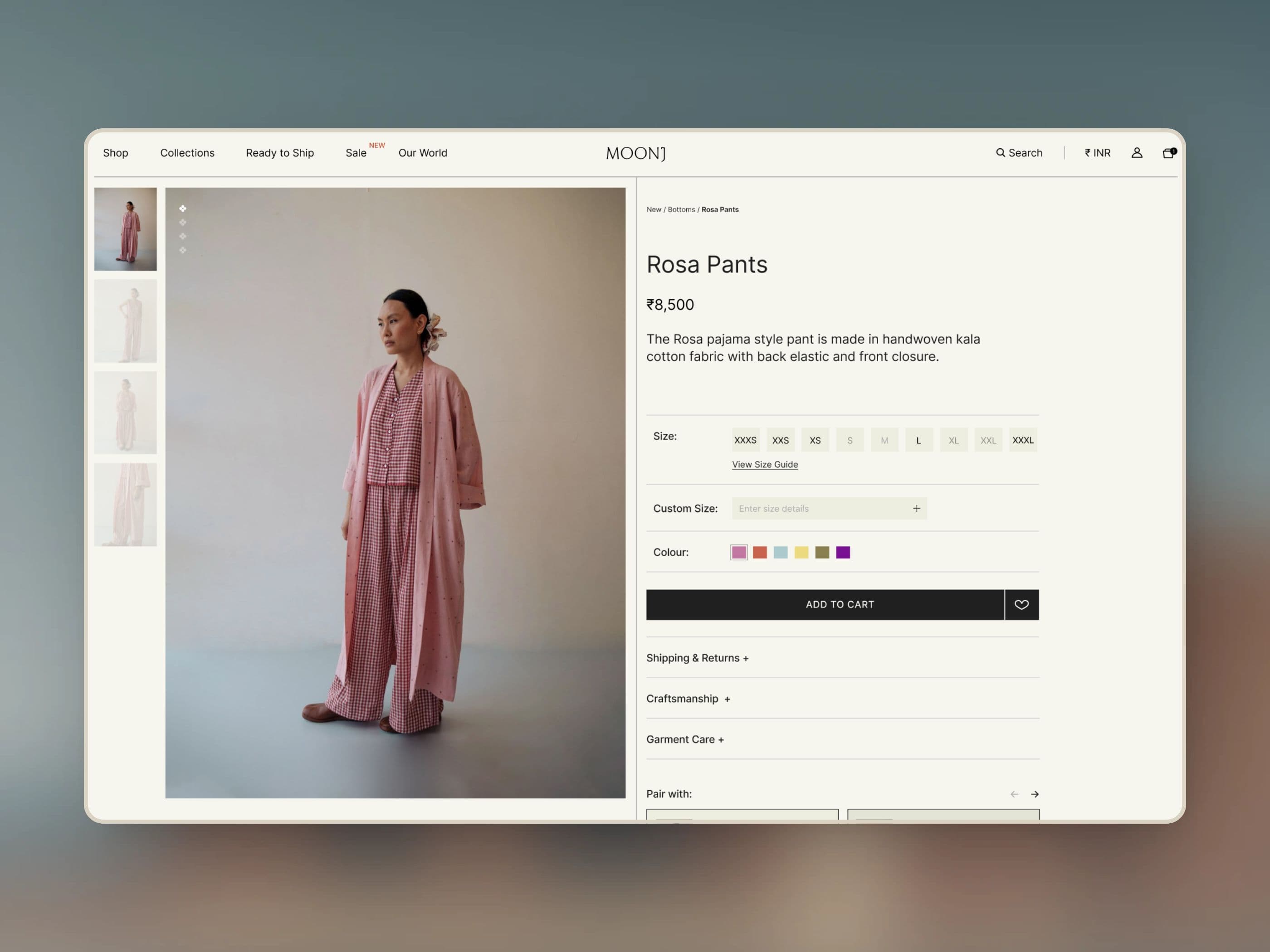
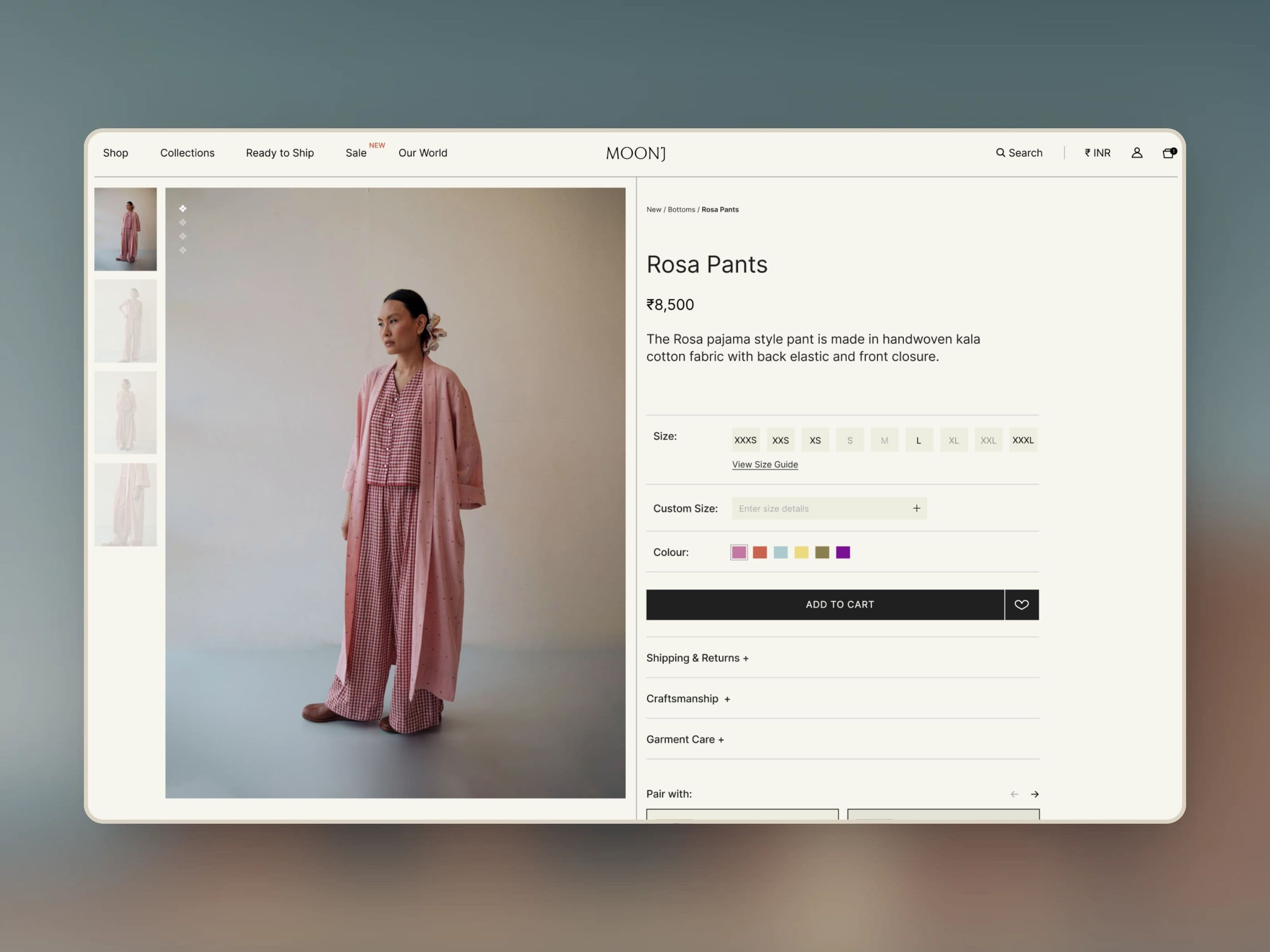
The centerpiece is a metaobject page template that turns a content_group entry into a full editorial page. The fabric library works this way: an interactive three-column layout where a nav of fabric entries drives a detail panel with descriptions and nested accordions, powered by a small custom element for tab switching. New fabric pages need zero code; the team creates a metaobject entry and Shopify routes and renders it. Product pages use another pattern: craftsmanship, garment care and shipping drawers that look up the metaobject entry referencing the current product, and render only when a match exists, so every product shows exactly its own story.
The result
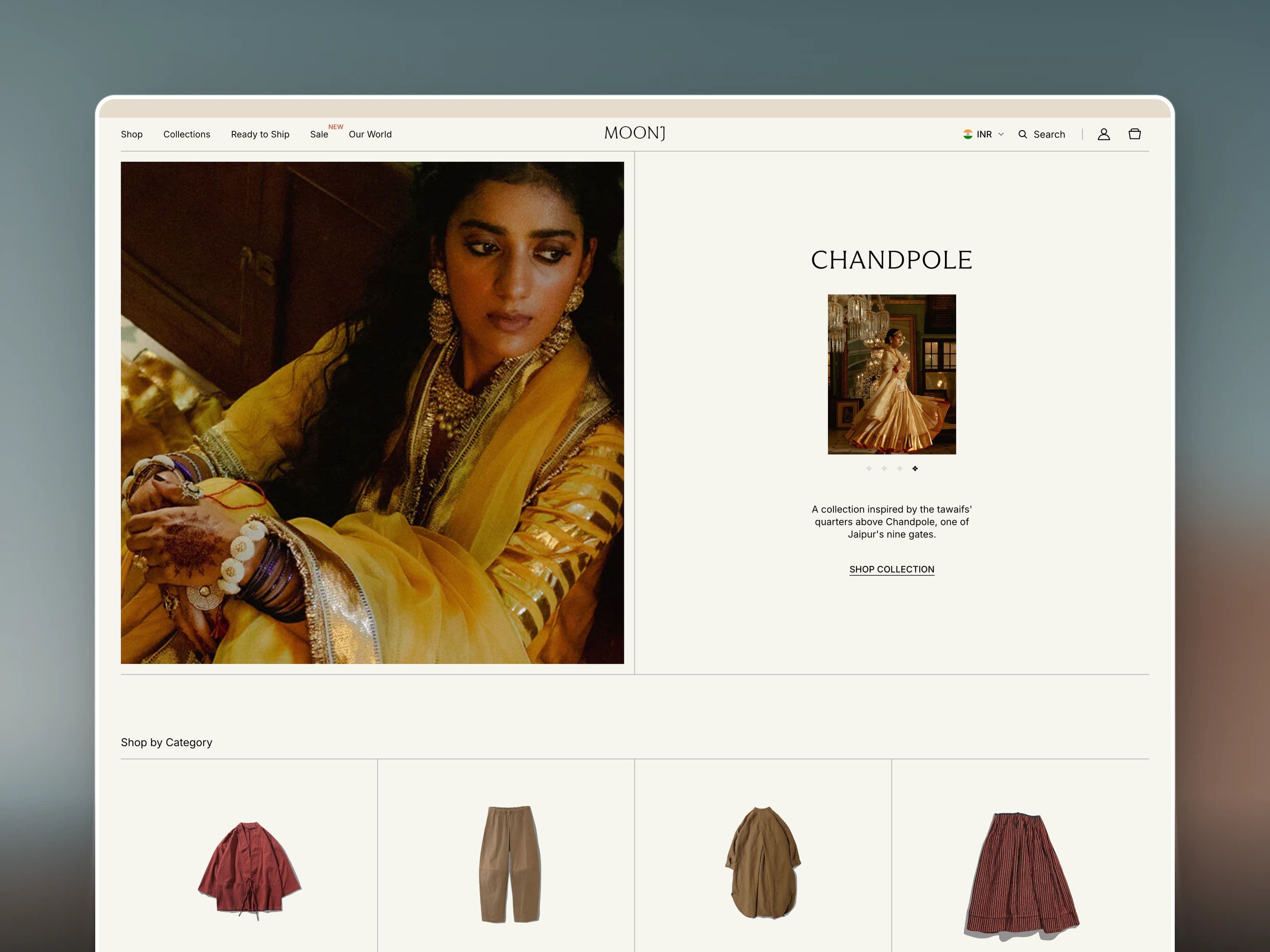
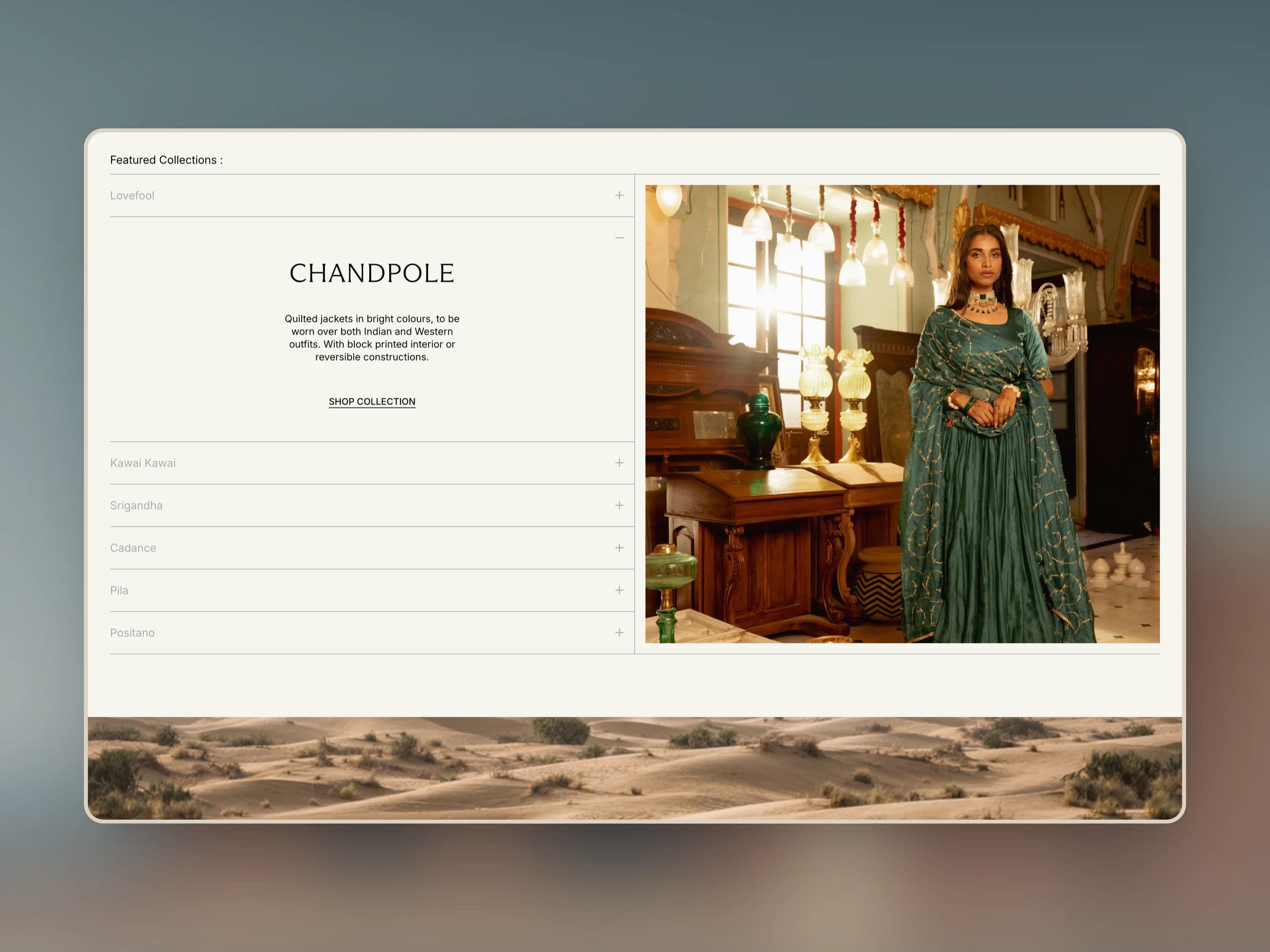
Around that core sits a set of custom editorial sections: a "making of the garment" feature grid fed by metafields, a curated multi-product edit page, a fully block-driven wholesale application form, a stockists page with location filtering, and a long-form about page composed from image-and-text story sections. With 51 locale files it sells internationally out of the box, and because everything is blocks and structured content, the team extends the site by composing, not coding.